

November 10, 2021
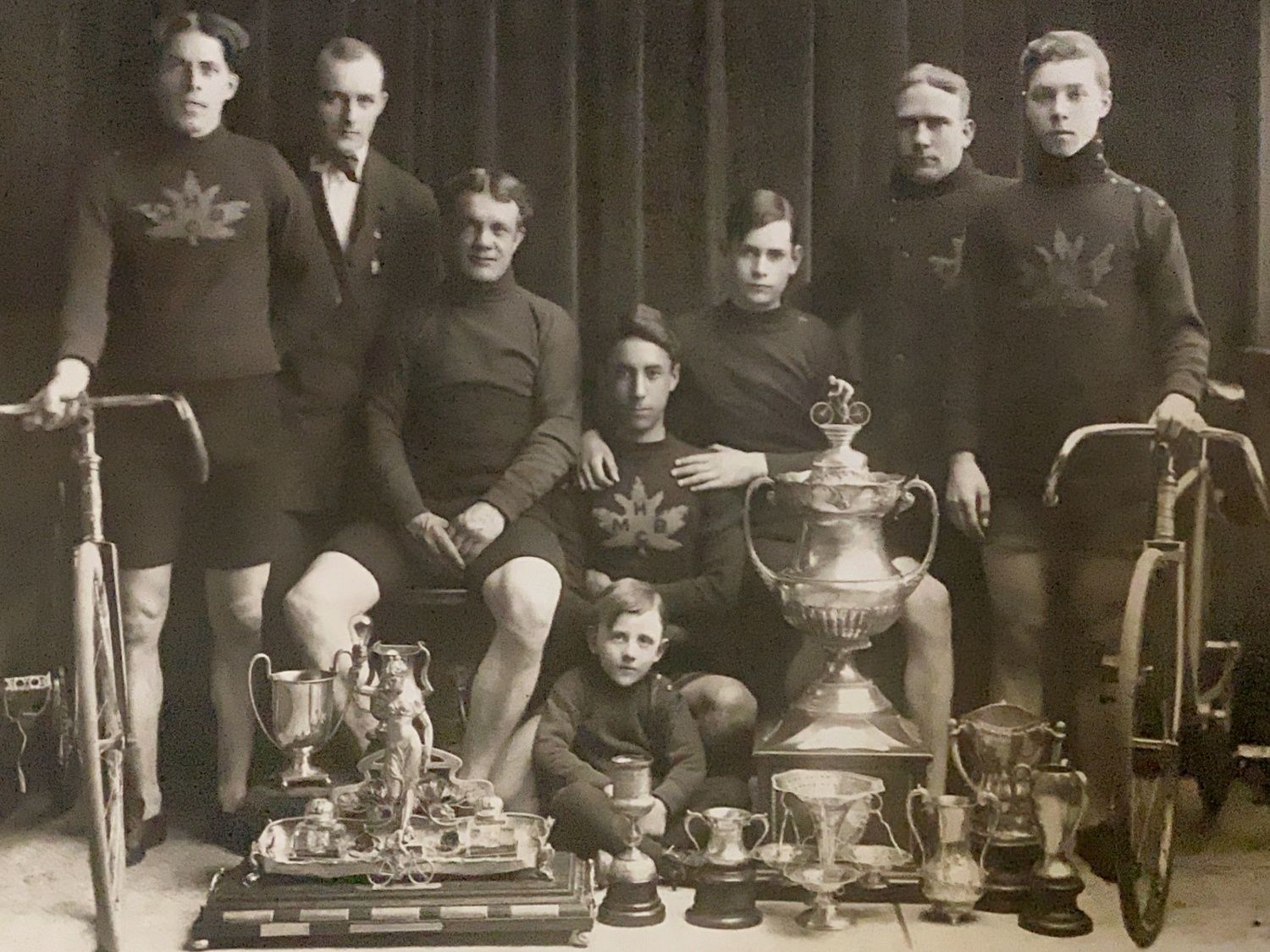 The Herbert McDonald Track Cycling Team of Toronto in 1917
Track racing is one of the oldest forms of bike racing. In the early 1900s, it was the most popular sporting event. Maple Leaf Gardens and Madison Square Gardens were filled to the roof with spectators and cyclists were the highest paid athletes. The riders were not only sportsmen, but also acrobats on their bikes and entertainers. A well-run track meet remains one of the most thrilling cycling events to watch and compete in.
The Herbert McDonald Track Cycling Team of Toronto in 1917
Track racing is one of the oldest forms of bike racing. In the early 1900s, it was the most popular sporting event. Maple Leaf Gardens and Madison Square Gardens were filled to the roof with spectators and cyclists were the highest paid athletes. The riders were not only sportsmen, but also acrobats on their bikes and entertainers. A well-run track meet remains one of the most thrilling cycling events to watch and compete in.
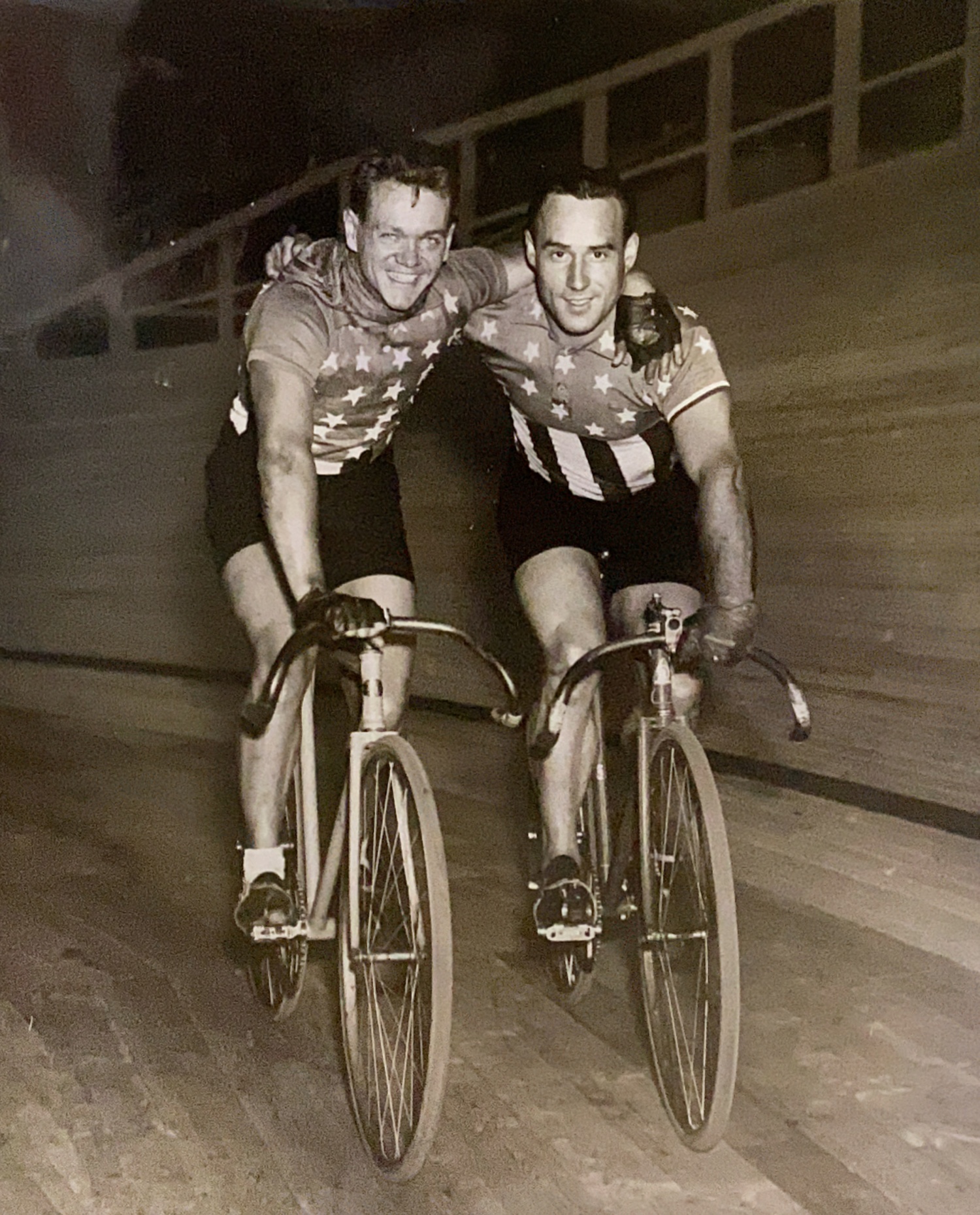 The US National Team after winning a Madison event.
In Canada, cyclists are limited by the long winter where snow, ice and cold keep us indoors. Over the past few decades, the racing calendar, which runs from March until November, has become less populated. Recently, Bridge the Gap, noted that young cyclists in Canada race thirty percent less than their international competitors. For a multitude of reasons, the criteriums which took place most weekends through the summer a decade ago are now infrequent while road races barely exist.
Pinning a number on, feeling the nerves of being on the start line, winning, losing, working with teammates, dealing with known and unpredicted variables, is all part of the race craft that is learned through experience.
Fortunately, there are a few gravel events, mountain bike and cyclocross races where young riders can compete and gain valuable bike handling skills. But often those disciplines rarely involve pelotons traveling at high speed.
Canada now has a handful of velodromes that can fill a gap and allow kids and adults to race frequently, sometimes three to four times on a weekend evening. Even the weekly velodrome youth training sessions have micro races, like hockey scrimmages between teammates, where the kids can learn the skills to handle their bikes at speed in a group, decipher the tactical games and gain confidence through their failures and victories. On the track they can quickly learn the skills they are lacking while also gaining the speed of racing which is hard to replicate during a training session, especially in the depth of winter when they might otherwise be pedalling away on a stationary bike.
From the sidelines, coaches and mentors can provide direct feedback to the riders, teaching them quickly how to improve. At the youth sessions, riders quickly develop friendships and a community as their coaches run them through skills, drills and races. At the races, veteran riders provide friendly advice to the rookie kids.
The US National Team after winning a Madison event.
In Canada, cyclists are limited by the long winter where snow, ice and cold keep us indoors. Over the past few decades, the racing calendar, which runs from March until November, has become less populated. Recently, Bridge the Gap, noted that young cyclists in Canada race thirty percent less than their international competitors. For a multitude of reasons, the criteriums which took place most weekends through the summer a decade ago are now infrequent while road races barely exist.
Pinning a number on, feeling the nerves of being on the start line, winning, losing, working with teammates, dealing with known and unpredicted variables, is all part of the race craft that is learned through experience.
Fortunately, there are a few gravel events, mountain bike and cyclocross races where young riders can compete and gain valuable bike handling skills. But often those disciplines rarely involve pelotons traveling at high speed.
Canada now has a handful of velodromes that can fill a gap and allow kids and adults to race frequently, sometimes three to four times on a weekend evening. Even the weekly velodrome youth training sessions have micro races, like hockey scrimmages between teammates, where the kids can learn the skills to handle their bikes at speed in a group, decipher the tactical games and gain confidence through their failures and victories. On the track they can quickly learn the skills they are lacking while also gaining the speed of racing which is hard to replicate during a training session, especially in the depth of winter when they might otherwise be pedalling away on a stationary bike.
From the sidelines, coaches and mentors can provide direct feedback to the riders, teaching them quickly how to improve. At the youth sessions, riders quickly develop friendships and a community as their coaches run them through skills, drills and races. At the races, veteran riders provide friendly advice to the rookie kids.
 Mariposa Cycling Team riders: Hudson Lubbers, Ashlin Barry and Sebastian Vega at the NCIM Akuna Cup Races November 6, 2021
Since the Mattamy National Cycling Centre in Milton was built for the Pan American Games in 2015, the results are significant: World Championship medals and Olympics medals were won, and, most importantly, hundreds of young children have tried the track for the first time. “Build it and they will come.” By increasing the pool of cyclists and providing them with a venue to train and compete Canada is progressively becoming internationally competitive.
At the weekend track meets Milton, World Champions now warm up alongside first time racers. For rookies, seeing the rainbow jerseys trackside, and knowing the channels to the pinnacle of cycling are in place not only provides motivation but also the knowledge that the top is tangible.
Mariposa Cycling Team riders: Hudson Lubbers, Ashlin Barry and Sebastian Vega at the NCIM Akuna Cup Races November 6, 2021
Since the Mattamy National Cycling Centre in Milton was built for the Pan American Games in 2015, the results are significant: World Championship medals and Olympics medals were won, and, most importantly, hundreds of young children have tried the track for the first time. “Build it and they will come.” By increasing the pool of cyclists and providing them with a venue to train and compete Canada is progressively becoming internationally competitive.
At the weekend track meets Milton, World Champions now warm up alongside first time racers. For rookies, seeing the rainbow jerseys trackside, and knowing the channels to the pinnacle of cycling are in place not only provides motivation but also the knowledge that the top is tangible.