

December 13, 2018
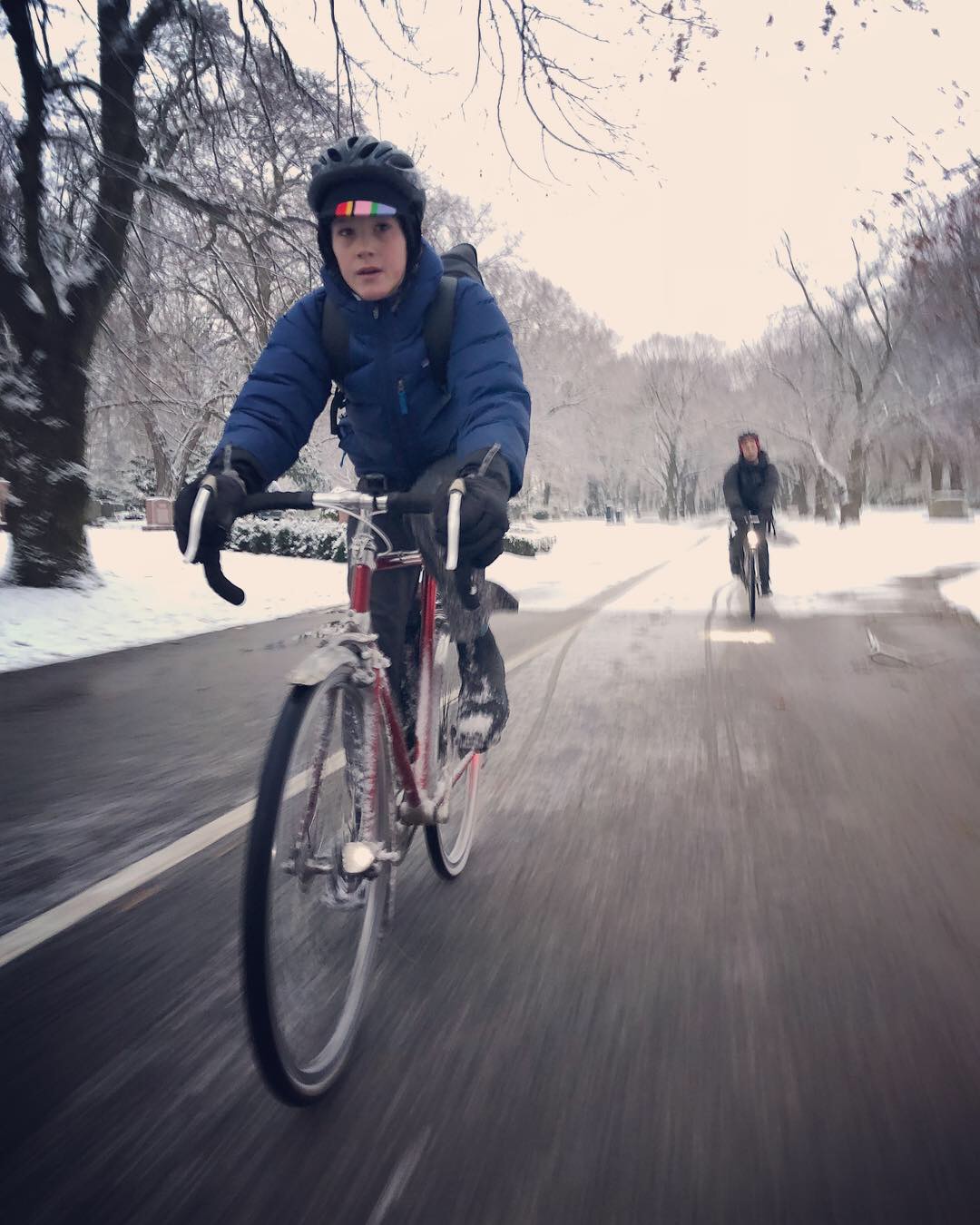 Kids traveling to school by car often take on the stress of nasty interactions between road raged drivers. The car line up at the drop-off often causes tardiness and anxiety for kids and parents. Meanwhile the bike racks are often empty and easily accessible, providing an easy and lower stress start to the school day.
Other than providing bike racks and an annual 'Bike To School' day, few schools are doing anything to encourage children to use other forms of transport. The infrastructure in many cities doesn’t make commuting safe or easy. But, driving children to protect them isn’t going to solve the problem. The schools should have programs to teach safe cycling and they should be encouraging, or even incentivizing, children to commute by bus, bike or foot.
In Boulder, Colorado the schools have been proactive in developing incentivized cycling programs. The Boulder Valley School Board developed a Trip Tracker in partnership with local businesses, which encourages and rewards students and families for using alternatives to single family car transportation to BVSD schools. The program goal is to significantly reduce car traffic and associated air pollution in front of schools thereby enhancing student safety and health. Students are rewarded monthly for walking, biking, carpooling and riding either the school bus or RTD. Students receive a Trip Tracker dollar for every five 'Green Trips' to or from school that can be used like cash at over 50 local businesses.
Along with the Trip Tracker program, they have also launched courses that provide skills and safety training for students in fourth through seventh grades. Expert cycling instructors using standards of the League of American Bicyclists in tandem with physical education teachers lead the courses. Bicycles and helmets are available for loan to students.
Other organizations that are really helping to promote cycling to school include the Safe Routes Partnership and Safe Routes Info which are working to make it easier and safer for youth to ride or walk to school across the nation.
Studies have shown and exercise before school improves focus, academic performance, lowers obesity levels / BMI (body mass index), develops deeper social connections to friends and school and results in greater happiness and satisfaction with life. In addition to the health, social and performance benefits, cycling is fun and a great way to get to know your city better and experience first hand the seasons, the changes and to connect with people in the community.
In North American cities there are too many cars. The streets are jammed during rush hours, paralyzed by the congestion as cars sit idling at traffic lights, or on highways. Inside the cars, the occupants sit equally as idle, waiting as their impatience grows, not wanting to give an inch, and not wanting to lose a minute. They eye their GPS incessantly looking for a faster route, but there is none. Their irritation grows with each red light, with each lull in their movement so, they yell at other drivers, at cyclists, at pedestrians, they hit their horns, they squeal their tires. We need to create the infrastructure to help people become less reliant on their cars. By educating and encouraging children on using other forms of transport we will not only improve the physical and mental health of the population but also decrease the rapid degradation of the natural environment.
After I drop the kids at school, I ride across town to the workshop. I pedal by lined up cars and thread my way through the quieter neighbourhoods, down back alleys, through parks and along bike lanes. The rides are often the best bit of the day.
Kids traveling to school by car often take on the stress of nasty interactions between road raged drivers. The car line up at the drop-off often causes tardiness and anxiety for kids and parents. Meanwhile the bike racks are often empty and easily accessible, providing an easy and lower stress start to the school day.
Other than providing bike racks and an annual 'Bike To School' day, few schools are doing anything to encourage children to use other forms of transport. The infrastructure in many cities doesn’t make commuting safe or easy. But, driving children to protect them isn’t going to solve the problem. The schools should have programs to teach safe cycling and they should be encouraging, or even incentivizing, children to commute by bus, bike or foot.
In Boulder, Colorado the schools have been proactive in developing incentivized cycling programs. The Boulder Valley School Board developed a Trip Tracker in partnership with local businesses, which encourages and rewards students and families for using alternatives to single family car transportation to BVSD schools. The program goal is to significantly reduce car traffic and associated air pollution in front of schools thereby enhancing student safety and health. Students are rewarded monthly for walking, biking, carpooling and riding either the school bus or RTD. Students receive a Trip Tracker dollar for every five 'Green Trips' to or from school that can be used like cash at over 50 local businesses.
Along with the Trip Tracker program, they have also launched courses that provide skills and safety training for students in fourth through seventh grades. Expert cycling instructors using standards of the League of American Bicyclists in tandem with physical education teachers lead the courses. Bicycles and helmets are available for loan to students.
Other organizations that are really helping to promote cycling to school include the Safe Routes Partnership and Safe Routes Info which are working to make it easier and safer for youth to ride or walk to school across the nation.
Studies have shown and exercise before school improves focus, academic performance, lowers obesity levels / BMI (body mass index), develops deeper social connections to friends and school and results in greater happiness and satisfaction with life. In addition to the health, social and performance benefits, cycling is fun and a great way to get to know your city better and experience first hand the seasons, the changes and to connect with people in the community.
In North American cities there are too many cars. The streets are jammed during rush hours, paralyzed by the congestion as cars sit idling at traffic lights, or on highways. Inside the cars, the occupants sit equally as idle, waiting as their impatience grows, not wanting to give an inch, and not wanting to lose a minute. They eye their GPS incessantly looking for a faster route, but there is none. Their irritation grows with each red light, with each lull in their movement so, they yell at other drivers, at cyclists, at pedestrians, they hit their horns, they squeal their tires. We need to create the infrastructure to help people become less reliant on their cars. By educating and encouraging children on using other forms of transport we will not only improve the physical and mental health of the population but also decrease the rapid degradation of the natural environment.
After I drop the kids at school, I ride across town to the workshop. I pedal by lined up cars and thread my way through the quieter neighbourhoods, down back alleys, through parks and along bike lanes. The rides are often the best bit of the day.